




SETENA D1-C Form for Projects in Environmentally Fragile Areas
D1-C is an environmental assessment pathway for low-impact activities, works or projects that fall within the Category C threshold and are located in an Environmentally Fragile Area. We review the project, its location and the environmental information needed to correctly prepare the SETENA application.
D1-C applies when three conditions are met
Not every small project requires D1-C, and merely being located in an Environmentally Fragile Area is not enough. The applicable pathway is determined by combining the type of activity, its threshold and the project's location.
Low environmental impact
The activity, work or project must fall within a low environmental impact category under the classification established by the Regulations.
Category C threshold
The project must fall within the range or threshold defined for Category C for the corresponding activity in Annex 1.
Environmentally Fragile Area
The Project Area must be located within a condition recognized as an Environmentally Fragile Area under Article 98 of Executive Decree No. 43898.
What makes a property an Environmentally Fragile Area?
The Regulations recognize as Environmentally Fragile Areas spaces subject to special protection regimes and territories with particular environmental conditions or limitations on their use.
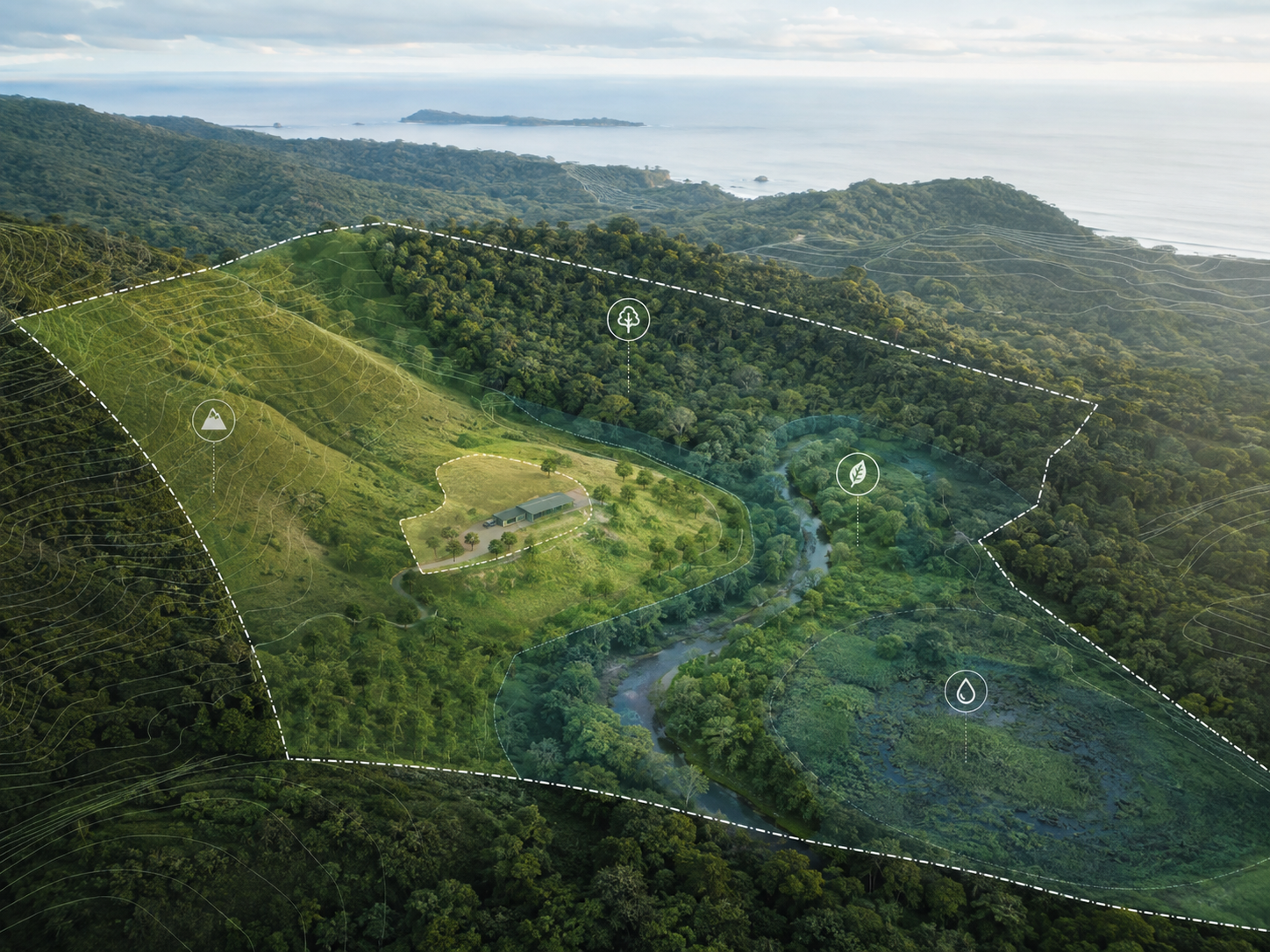
Being in an Environmentally Fragile Area does not automatically mean a project is prohibited
This condition must be assessed together with the nature of the activity, its precise location and the specific regulations that apply.
Some areas have their own legal restrictions, while others require the identification, assessment and appropriate management of existing environmental conditions before selecting the project's assessment pathway.
First, we confirm that D1-C is actually the correct pathway
Before preparing the application, it is advisable to verify the project's classification and the property's environmental conditions to avoid starting an unsuitable procedure.
We classify the project
We review the nature of the activity and its classification to identify the applicable environmental threshold.
We review the Project Area
We accurately locate the property and the area where work will take place to analyze their relationship with applicable environmental conditions.
We confirm the procedure
Once the activity, threshold and location are established, we determine whether D1-C applies or whether the project must follow another environmental assessment pathway.
What information is needed to prepare a D1-C?
The exact information depends on the project, but the application combines legal, property registration, spatial and environmental data that must be consistent with one another.
We prepare the D1-C from project location through submission
We review the environmental pathway
We verify the activity, threshold, Project Area and environmentally fragile conditions before preparing the application.
We integrate the information
We organize the property registration, mapping, environmental and technical data needed to complete the process.
We assist with submission
We prepare the application for submission to SETENA and provide technical support during the process within the agreed scope of services.
From the initial assessment to SETENA's decision
We review the project
We identify the activity, dimensions, property, location and project stage.
We confirm D1-C
We verify Category C, the applicable threshold and the relationship with Environmentally Fragile Areas.
We prepare the information
We organize the property registration, cartographic and environmental components of the application.
We complete the application
We enter the required information into the Digital Platform and prepare the corresponding documents.
SETENA review
SETENA technically reviews the application and may issue its assessment or request additional information.
Decision
The procedure concludes with an administrative decision and notification through the established channels.
D1-C or D1 Form?
These are different environmental assessment pathways. The choice should not be based solely on project size.
Category C project within an EFA
This applies when the project simultaneously meets the low-impact condition, the Category C threshold and location within an Environmentally Fragile Area.
Another environmental assessment pathway
When the activity or its dimensions exceed the threshold applicable to D1-C, or its classification requires another pathway, submission through D1 and the corresponding environmental instrument must be assessed.
Environmental assessment through SETENA
The D1-C Form is part of the Environmental Impact Assessment procedure administered by the National Environmental Technical Secretariat.
National Environmental Technical Secretariat
SETENA
D1-C is part of the Environmental Impact Assessment procedure
SETENA reviews the activity classification, submitted information and relationship between the Project Area and applicable environmentally fragile conditions before issuing the corresponding decision.
For this reason, the application must be consistent regarding the proposed activity, project dimensions, property, georeferencing and environmental information provided.
Regulations on Environmental Assessment, Control and Monitoring
The D1-C Form is primarily regulated by Executive Decree No. 43898-MINAE-S-MOPT-MAG-MEIC, including provisions concerning D1-C, Environmentally Fragile Areas and the annexes applicable to the procedure.
D1-C Form and Environmentally Fragile Areas
Does every project in an Environmentally Fragile Area require D1-C?
No. D1-C requires all three conditions established in the Regulations: low environmental impact, a Category C threshold and location within an EFA.
Does being in an Environmentally Fragile Area mean I cannot develop my property?
Not necessarily. Some areas have specific restrictions; in others, the condition requires identifying the environmental limitations and considering them in the project.
Does building size automatically determine whether D1-C applies?
No. Thresholds depend on the activity and its classification. Annex 1 and the project's location must therefore be reviewed before choosing the form.
Is an environmental consultant required to submit D1-C?
Yes. Decree No. 43898 requires the participation of an environmental consultant registered with SETENA alongside the developer when submitting D1-C.
Can SETENA request additional information?
Yes. The regulations allow requests for missing information or clarifications when appropriate during the application review.
What should I send Geo Costa Rica to get started?
A cadastral survey plan, property location, description of the activity, preliminary project dimensions and any available environmental background information are useful starting points.
Does your project require D1-C?
We review the activity, its dimensions, the property's location and environmentally fragile conditions to identify the appropriate environmental assessment pathway.
Let's review your project
Send us the cadastral survey plan, location and a basic description of what you intend to develop. With this information we can begin determining which environmental procedure applies.