




Cleaning and Disinfection Program
Geo Costa Rica develops Cleaning and Disinfection Programs tailored to how each facility actually operates: what needs to be cleaned, how, when, with which products, who is responsible, and how to demonstrate that the tasks were completed.
What is a Cleaning and Disinfection Program?
It is the documented organization of the tasks necessary to keep a facility's areas, equipment, and surfaces clean and hygienic according to its activities.
An effective program should answer at least five questions: what is cleaned, how, when, by whom, and with what?
Geo Costa Rica adds another question: how can we demonstrate that the procedure is actually being implemented?
Which facilities may need a Cleaning and Disinfection Program?
Requirements vary depending on the type of facility, its activities, and the applicable health conditions.
Hotels
Guest rooms, kitchens, common areas, bathrooms, and internal services.
Restaurants and small eateries
Food preparation, surfaces, utensils, and service areas.
Shops and service businesses
Bathrooms, customer areas, storage rooms, and indoor spaces.
Other facilities
Depending on activities, health risks, and Ministry of Health requirements.
Not every facility needs exactly the same program. Content must be tailored to the activities and actual site conditions.
Cleaning is not the same as disinfecting
The program must distinguish when dirt and residues need to be removed and when an additional disinfection step is required.
Remove dirt and residues
Aims to remove visible dirt, remnants, grease, or other material from surfaces or equipment.
Reduce microbiological contamination
When applicable, this follows proper cleaning using products and procedures compatible with the area's use.
Applying disinfectant to a dirty surface does not replace proper cleaning.
Facility assessment
Before drafting procedures, we review how the facility operates and the conditions of each area.
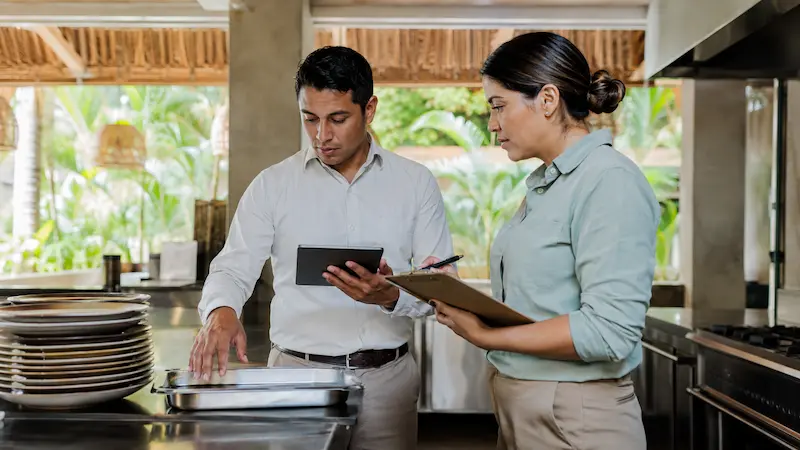
A visit helps identify surfaces, equipment, critical points, current practices, product storage, and recordkeeping needs.
- Layout of areas.
- Use of each space.
- Surfaces and equipment.
- Current cleaning practices.
- Products and supplies used.
- Current responsible personnel.
- Existing frequencies.
- Available records.
We organize the program by facility area
A kitchen does not require exactly the same tasks as a bathroom, reception area, storage room, or administrative office.
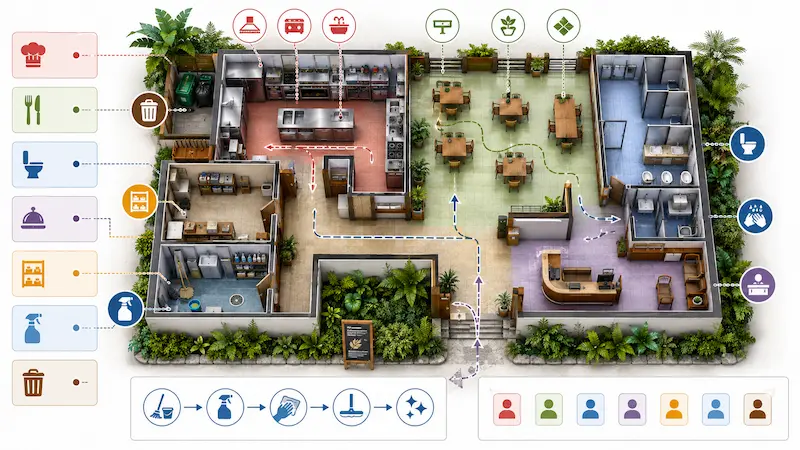
Kitchen
Floors, surfaces, equipment, utensils, and food preparation areas.
Bathrooms
Toilets, sinks, floors, surfaces, and touchpoints.
Customer service areas
Tables, furniture, reception, circulation, and shared surfaces.
Storage and service areas
Shelving, storage, cleaning rooms, and auxiliary areas.
Which surfaces, equipment, and items should be included?
The inventory should cover items relevant to the facility's hygiene, operation, and sanitary risks.
Floors, walls, and furniture
They are identified according to use, exposure, and the characteristics of each area.
Equipment and utensils
Procedures must address equipment requiring specific cleaning.
Frequently touched points
Handles, shared surfaces, and other items may require special attention.
Cleaning methods and frequencies
The program must establish clear instructions for every area, surface, or item of equipment covered.
Frequency should not be set solely out of habit. It should reflect how the space is used, its exposure level, and facility needs.
Cleaning products, tools, and supplies
The program should identify the necessary supplies and ensure consistency between each product, procedure, and area of use.
Appropriate use
Products should be used according to their intended purpose and applicable instructions.
Maintain control
Products should be identified and organized to reduce errors during use.
Product + surface
Not all surfaces, equipment, or materials should be treated in the same way.
The program organizes procedures. It does not replace technical instructions, safety data sheets, or manufacturers' specifications for individual products.
Storage of products and cleaning equipment
Cleaning products must be organized, identified, and kept separate from areas incompatible with their storage.
The program can establish how to organize the space for cleaning products, tools, and equipment.
- Clearly designated area.
- Labeled products.
- Organized tools.
- Separation from food or other sensitive materials.
- Access control when necessary.
- Appropriate order and cleanliness.
Responsibilities and work organization
A program works best when each activity clearly identifies who performs it and who verifies compliance.
Who performs the task
The program identifies the responsible person, position, or team.
Who verifies it
Some tasks may require a subsequent check.
What happens when staff change
Documented procedures support continuity regardless of any one person.
Identifying critical areas
Some areas have higher exposure, handling, traffic, or sanitary sensitivity and may require stricter controls.
Food preparation
Surfaces and equipment that come into contact with food require procedures appropriate to their use.
Restrooms
These areas have distinct hygiene and frequency requirements.
High-contact surfaces
Frequently used items may require special attention.
Records, logs, and evidence of implementation
A completed task should leave a record showing when it was performed and by whom.
When it was done
Records enable comparison with the scheduled frequency.
Who performed the task
Supports operational traceability.
Evidence of compliance
Makes internal reviews and inspections easier when applicable.
Cleaning and disinfection matrix
We organize information so the facility can quickly find the task assigned to each area.

The matrix can simply connect area + item + method + product + frequency + responsible person + record.
How does Geo Costa Rica develop a Cleaning and Disinfection Program?
We start with actual facility conditions and turn them into an organized, practical system.
Proper implementation can reduce errors and waste
Organized cleaning helps prevent duplicated tasks, omissions, inappropriate supply use, and other inefficiencies that affect operations.
Avoid disorganized tasks
A clear program reduces improvisation and unnecessary repetition.
Better product control
Defined procedures support more consistent supply use.
Reduce sanitary problems
Prevention can avoid incidents that might later cause disruptions, losses, or regulatory requirements.
Cleaning and Disinfection Program and Sanitary Orders
A Ministry of Health inspection may identify shortcomings in hygiene, procedures, storage, records, or implementation.
If a facility has received a Sanitary Order, we first review precisely what the Ministry required and what evidence must be produced.
The Cleaning and Disinfection Program can then become part of a broader compliance plan.
What do we need to get started?
We can begin with basic information and complete the assessment during the facility visit.
General information
- Main activity.
- Location.
- Approximate staff count.
- Main areas.
Existing procedures
- Previous program, if available.
- Product lists.
- Records or logs.
- Current responsible personnel.
Health authority requirements
- Sanitary Order, if any.
- Inspection report.
- Previous observations.
- Official communications.
How do we develop the Cleaning and Disinfection Program?
The process turns actual facility operations into organized, easy-to-follow procedures.
Questions about Cleaning and Disinfection Programs
Answers for facilities that need to organize their procedures and demonstrate implementation.
What is a Cleaning and Disinfection Program?
This document and operating system defines what is cleaned, how, with which products, how frequently, who is responsible, and how each task is recorded.
Can Geo Costa Rica prepare a Cleaning and Disinfection Program?
Yes. Geo Costa Rica can inspect the facility, organize its areas, and structure procedures, frequencies, responsibilities, and records according to the applicable scope.
Are cleaning and disinfection the same thing?
No. Cleaning removes dirt and residues; disinfection, when needed, aims to reduce microbiological contamination following proper cleaning.
Must the program specify which products are used?
Yes. It can identify the products and supplies used for each procedure, in accordance with relevant instructions and requirements.
Must every area be cleaned with the same frequency?
Not necessarily. Frequency should be adjusted to each area's use, exposure, and sanitary conditions.
Must the program assign responsibilities?
Yes. Every activity should clearly identify who performs it and, where applicable, who verifies compliance.
Do I need to keep cleaning records?
Records show when tasks were performed and facilitate monitoring of program implementation.
Does Geo Costa Rica physically carry out the cleaning?
No. Geo Costa Rica designs and organizes the technical and documentary program. Day-to-day cleaning is performed by the facility's staff or contracted provider.
Can Geo Costa Rica perform microbiological validation of a surface?
When microbiological analysis is required, it must be performed by a qualified laboratory or specialist. Geo Costa Rica can incorporate those results into the program as appropriate.
Could a hotel need this program?
Yes. A hotel may need different procedures for rooms, bathrooms, kitchens, restaurants, common areas, storage rooms, and other spaces.
Could a restaurant need a Cleaning and Disinfection Program?
Yes. Cleaning and disinfection are fundamental to hygiene and sanitary operations in food establishments.
Can a Sanitary Order require better facility cleaning?
Yes. An inspection may find deficiencies related to cleaning, disinfection, storage, implementation, or records, and require corrective action.
Can the Ministry of Health review whether the program is being implemented?
Yes. Depending on the activity and applicable regulatory framework,
Can a good program improve operations?
Yes. Clear organization can reduce omissions, repeated work, inappropriate supply use, and problems that could later affect facility operations.
Related procedures and services
Cleaning and disinfection may be part of a broader set of health obligations for the facility.
Compliance with Sanitary Orders
We analyze Health Ministry requirements, organize actions, responsibilities, and evidence, and coordinate the necessary components.
Integrated Waste Management Plan
Waste assessments, segregation, storage, managers, goals, indicators, and follow-up.
Emergency Response Plan
Facility inspection, hazards, routes, procedures, and evacuation mapping.
Can your facility demonstrate how cleaning is actually organized?
We can review existing areas, surfaces, equipment, products, frequencies, and practices and turn this information into a Cleaning and Disinfection Program tailored to how your facility actually operates.
The goal is not simply to produce another document: we want everyone to understand what needs to be done, when to do it, and how to provide evidence of compliance.