




Integrated Waste Management Plan (PGIR)
Geo Costa Rica prepares Integrated Waste Management Plans based on how the facility actually operates: what waste it generates, where it originates, how much is produced, how it is separated, where it is stored, and what happens to it until its final destination.
What is an Integrated Waste Management Plan?
It is a tool through which a waste generator identifies the waste it produces and organizes the actions needed to prevent, reduce, separate, reuse, recover, and properly manage the materials that ultimately must be discarded.
A PGIR should answer very specific questions: what do we generate, how much, where is it stored, who transports it, and what is its final destination?.
Based on this assessment, actions, assigned personnel, objectives, targets, and indicators are established to progressively improve waste management.
Does my facility need a PGIR?
Costa Rica's Integrated Waste Management Law establishes obligations for waste generators and provides for specific exceptions and conditions under applicable regulations.
What does the facility do?
The nature of the activity helps determine which waste streams may be generated and what obligations apply.
Which waste streams are generated?
Ordinary, organic, recyclable, electronic, special, and other waste streams require different management methods.
What does the Ministry of Health require?
We review background information, the activity, and institutional requirements before establishing the scope of the plan.
An effective PGIR should not remain in a filing cabinet
Its real value becomes evident when the plan helps understand and improve how waste is managed every day.
Keep information organized
The facility can keep its data, assigned personnel, records, and supporting evidence readily available.
Know what each area should do
Kitchens, guest rooms, offices, maintenance areas, and other spaces may generate different waste streams.
Identify opportunities
Measuring waste can reveal losses, segregation issues, and recovery opportunities.
What is neither known nor measured is difficult to reduce.
Facility waste assessment
Before proposing targets, we need to understand what waste currently exists and how it is being managed.
Waste type
We identify the main waste streams generated by the activity.
Quantity
We review or develop mechanisms to determine how much waste is generated.
Source
We determine which areas or processes generate each waste stream.
Storage
We identify where waste is temporarily stored.
Transportation
We review who collects or transports the different waste streams.
Final destination
We document where each type of waste ends up.
What waste does your facility actually generate?
The assessment must reflect the facility's real activity, not just a generic list of materials.
Non-recovered waste
Waste streams that ultimately require proper collection and disposal.
Paper, cardboard, glass, and more
Materials that can be kept separate to facilitate recovery.
Food and biodegradable materials
Particularly relevant to kitchens, restaurants, and hospitality establishments.
Waste streams requiring special handling
Some materials require separate management pathways.
Equipment and components
Computers, electrical equipment, and other waste that should not be mixed indiscriminately.
Depending on the activity
Oils, lamps, maintenance materials, and other specific waste streams.
We analyze how waste moves through the facility
Waste originates at different locations, follows internal routes, reaches storage areas, and eventually leaves the facility.
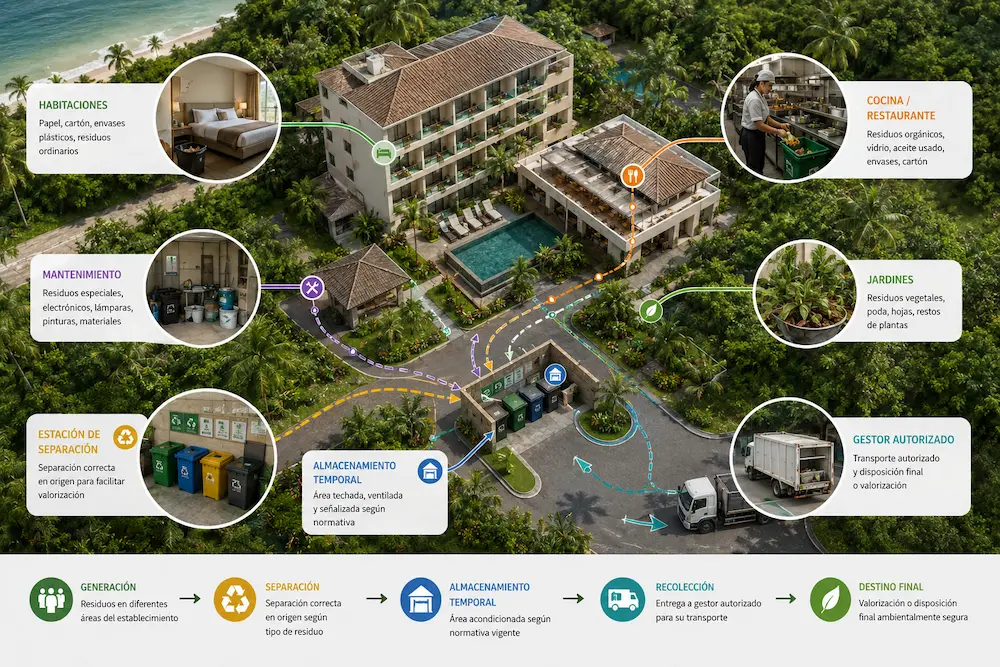
Segregation at source
Keeping waste streams separate from the point of generation facilitates recovery and reduces contamination between materials.
Appropriate collection points
Collection stations should match the waste actually generated in each area.
Clear identification
Staff need to understand what can be placed in each container.
Assigned responsibilities
Operations improve when it is clear who oversees and transports each stream.
Temporary waste storage area
The PGIR must identify where waste is kept before collection and how that space is organized.
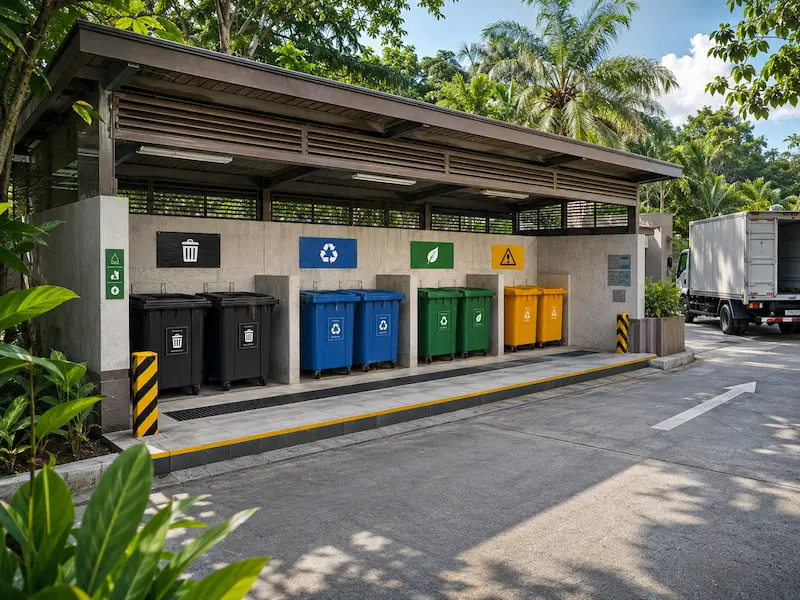
Good siting helps maintain order, segregation, accessibility, and control before waste is removed.
- Location within the facility.
- Access for internal collection.
- Segregation of waste streams.
- Storage conditions.
- Access for collectors or waste management providers.
- Area cleanliness and organization.
Waste prevention and reduction
Integrated waste management begins before the container: it must also identify opportunities to prevent or reduce waste at its source.
Review supplies
Some waste can be reduced by changing products, packaging, or procurement methods.
Identify wasteful practices
Measurements can reveal materials unnecessarily becoming waste.
Improve habits
Simple procedures can reduce generation and improve segregation.
Reuse and recovery of materials
Once waste streams are identified, we analyze which can be kept separate to facilitate reuse, recovery, or other beneficial use.
The objective is for the plan to apply the waste management hierarchy and progressively reduce the amount requiring final disposal.
Authorized waste management providers and waste destinations
When waste is handed over to third parties, the parties receiving, transporting, or managing it must be correctly identified.
Appropriate waste management provider
It must be verified that the provider is authorized to manage the waste stream being handed over.
Who collects the waste
The assessment must identify who is responsible for transporting each stream.
Know where it ends up
The plan must document the corresponding destination for the waste generated.
Geo Costa Rica does not act as a substitute for a waste management provider. Our work is to organize the plan, information, and traceability; collection, transportation, and waste management are performed by the authorized parties responsible for each stream.
Waste management records and evidence
Facilities should retain information showing how their different waste streams are managed.
Quantities
Generation or transfer records, when available.
Receipts
Documentation provided by collectors or waste management providers, as applicable.
Internal evidence
Photographs, records, training, and operational controls.
Objectives, targets, and compliance indicators
The PGIR must translate the assessment into concrete actions that can be measured and evaluated.
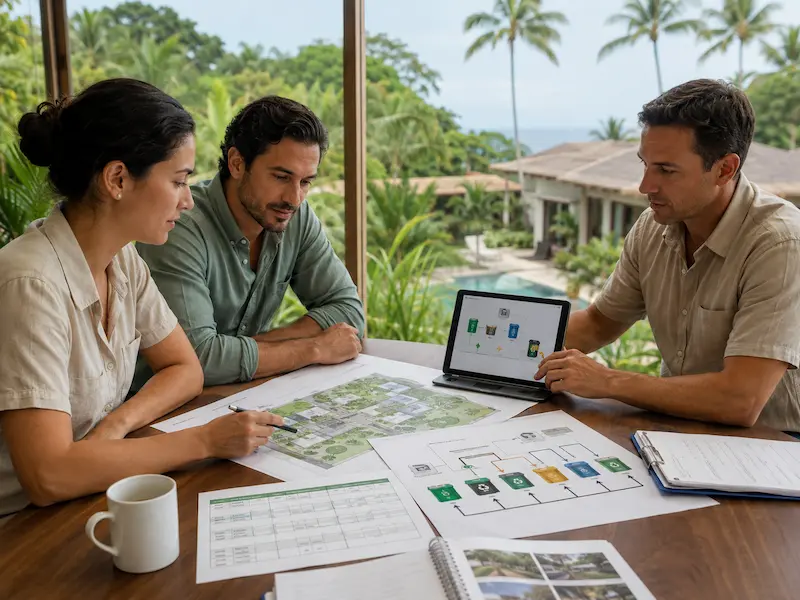
Each action can be linked to a target, an indicator, an assigned person, and the resources needed for implementation.
- Improvement objective.
- Quantifiable target, where applicable.
- Compliance indicator.
- Activity or action.
- Required resources.
- Person responsible.
- Progress monitoring.
How does Geo Costa Rica prepare a PGIR?
Our approach is designed to reflect the facility's real operations and turn the plan into a management tool.
PGIR implementation and monitoring
Once the plan is defined, the facility needs to implement its actions and retain information for assessing progress.
Clear responsibilities
Every action needs assigned personnel within the organization.
Regular recordkeeping
Data allow waste management performance to be compared over time.
Updating
The plan must be revised when processes, waste streams, or other relevant conditions change.
How can a PGIR relate to a Sanitary Order?
A Ministry of Health inspection may identify deficiencies in waste management, storage, documentation, or handling.
When waste management is part of a Sanitary Order, Geo Costa Rica can integrate the PGIR into an overall compliance action plan.
This connects the institutional requirement with specific actions, assigned personnel, and supporting evidence.
What do we need to get started?
We can start with basic information and complete the assessment through a review of documentation and the facility.
General information
- Main activity.
- Approximate number of staff.
- Main areas or processes.
- Facility location.
Available information
- Known waste types.
- Quantity records, if available.
- Current collectors.
- Available receipts or contracts.
Compliance
- Previous PGIR, if any.
- Ministry of Health observations.
- Sanitary Order, if applicable.
- Available photographs or plans.
How do we develop an Integrated Waste Management Plan?
The process progresses from an initial snapshot of the facility to an organized system for improvement and monitoring.
Questions about Integrated Waste Management Plans
Answers for facilities seeking to organize waste management and comply with Ministry of Health requirements.
What is a PGIR?
It is an Integrated Waste Management Plan that assesses generated waste and establishes actions, targets, indicators, and responsibilities for its proper management.
What does Geo Costa Rica do when preparing a PGIR?
Geo Costa Rica assesses the facility, identifies waste types, quantities, generation areas, storage, destinations, and responsible parties, and structures the plan's actions and indicators.
Is a PGIR just a document for the Ministry of Health?
No. Beyond regulatory compliance, it can help organize operations, reduce waste, and improve waste traceability.
What waste should a PGIR include?
It should identify the waste streams actually generated by the facility, including general waste, organics, paper, cardboard, plastics, glass, electronics, and other streams when applicable.
Do we need to know how much waste we generate?
Quantity is part of the assessment. If no records exist yet, mechanisms can be established to start measuring.
Does the PGIR need to identify where waste is stored?
Yes. The assessment includes the temporary storage locations of the different streams.
Do I have to hire authorized waste management providers?
It depends on the waste type and applicable management pathway. When waste is delivered to service providers, authorization for the specific waste management activity must be verified.
Does the PGIR need to state who transports the waste?
Yes. The assessment format includes identifying the party responsible for transporting each stream and its final destination.
Does a PGIR need targets and indicators?
Yes. The plan includes objectives, targets, compliance indicators, activities, resources, and assigned personnel.
Can Geo Costa Rica map internal waste routes?
Yes. Where useful, we can map generation points, segregation stations, internal routes, and storage areas to improve the spatial organization of the system.
Could a hotel need a PGIR?
Yes. Hotels may generate different waste streams in guest rooms, kitchens, gardens, maintenance facilities, offices, and other areas, making clear organization particularly useful.
Does the PGIR need updating?
Yes. The plan must be updated when relevant waste generation or management conditions change.
Can the Ministry of Health inspect PGIR implementation?
Yes. The legal framework provides for monitoring and oversight of these plans by Ministry of Health officials.
Can a Sanitary Order be related to the PGIR?
Yes. If an inspection identifies waste management problems, addressing those requirements may include updating, implementing, or improving existing documentation and practices.
Related procedures and services
Depending on the facility, waste management may be part of a broader set of sanitary requirements.
Compliance with Sanitary Orders
We organize requirements, actions, assigned personnel, and evidence when the facility has received a Sanitary Order.
Emergency Response Plan
Facility inspections, hazards, organization, evacuation, procedures, and emergency mapping.
Ministry of Health
Explore other services and procedures provided by Geo Costa Rica in relation to the Ministry of Health.
Do you really know what happens to the waste generated by your facility?
We can identify what waste you generate, where it originates, how it is separated, how it moves within the facility, where it is stored, and what happens to it through final disposal.
Based on that assessment, we prepare a PGIR with objectives, actions, responsibilities, and indicators to support compliance and improve everyday management.