



Environmental Management Plan (EMP) in Costa Rica
We turn project-related environmental impacts and commitments into concrete measures, assigned responsibilities, schedules, indicators and monitoring mechanisms for clear, verifiable environmental management.
From identified impacts to concrete action
An Environmental Management Plan organizes measures to prevent, mitigate, correct or compensate for the environmental impacts of a project and sets out how these measures will be implemented and verified.
Environmental measures
Defines the actions required to address the impacts identified for the project.
Responsibilities and schedules
Identifies who must carry out each measure and at which project stage it must be implemented.
Indicators and follow-up
Helps verify whether environmental actions are actually being implemented and are effective.
When might an Environmental Management Plan be needed?
An EMP can help a project organize environmental measures, compliance commitments, monitoring and oversight, whether as part of an environmental assessment procedure or its ongoing operations.
A useful measure must be actionable and verifiable
An effective EMP goes beyond a list of intentions. Each measure must respond to an impact and specify who is responsible, when it applies and how compliance will be verified.
Impact
Identifies the environmental effect to be managed.
Measure
Specifies the concrete environmental action to be taken.
Responsible party
Assigns who implements, supervises or follows up on the action.
Timing
Specifies the project phase in which the measure must be applied.
Indicator
Defines how compliance or performance will be verified.
Evidence
Specifies the records, inspections or supporting documents used to substantiate the measure.
An EMP may include different management strategies
The type of measure depends on the impact, the project design and the stage at which it must be implemented.
Avoid
Adjust decisions or activities to prevent the impact from occurring.
Reduce
Reduce the intensity, extent or duration of an environmental effect.
Restore
Restore or remedy affected conditions where feasible.
Offset
Establish compensatory actions when residual impacts remain.
Measure, document and demonstrate compliance
Monitoring helps verify whether measures are properly implemented and achieve their intended environmental purpose.
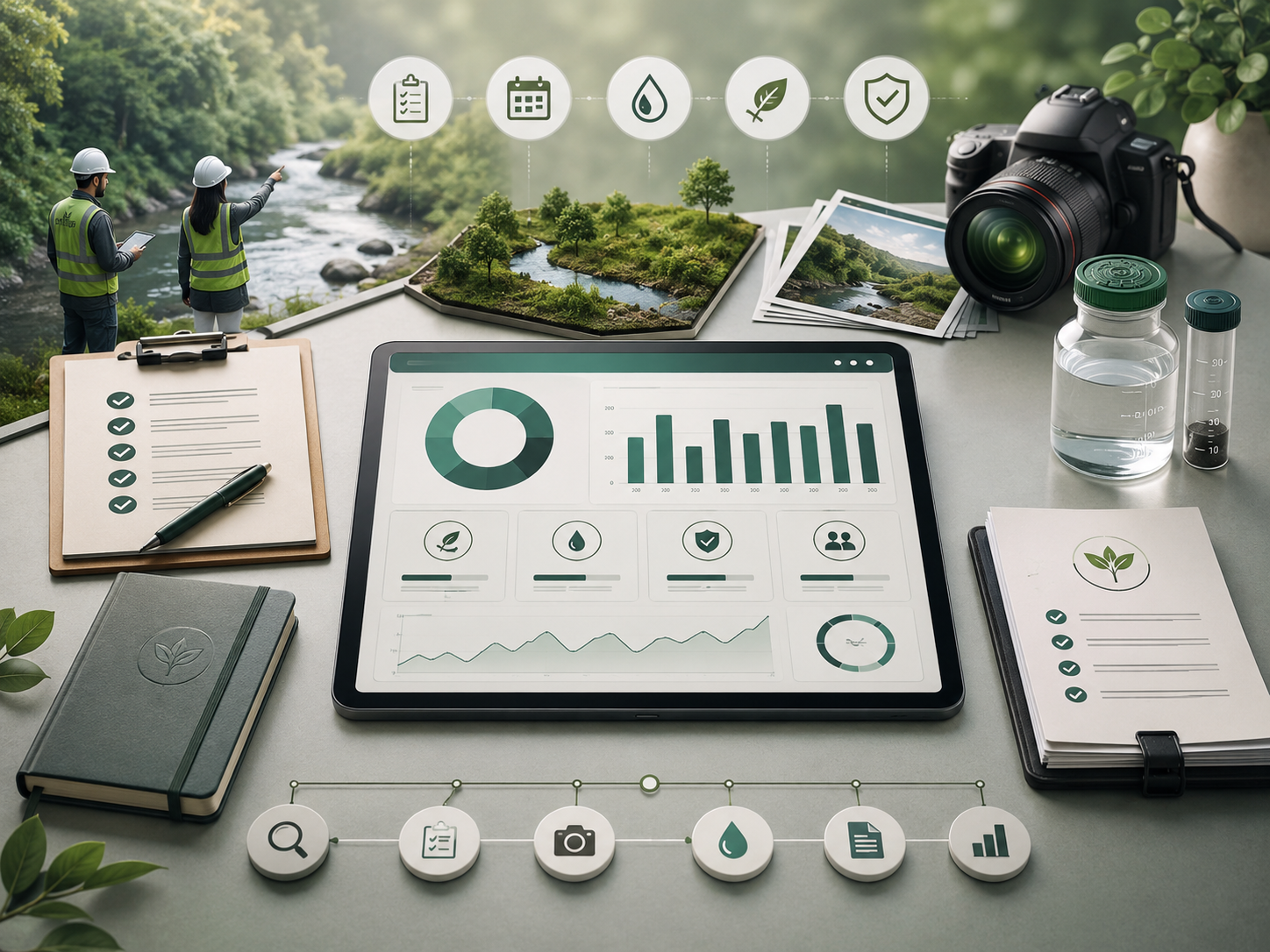
Follow-up turns the plan into effective management
An EMP must be workable on site
Environmental management becomes effective when measures move from the document into practice, with clear responsibilities and actions suitable for construction or operation.
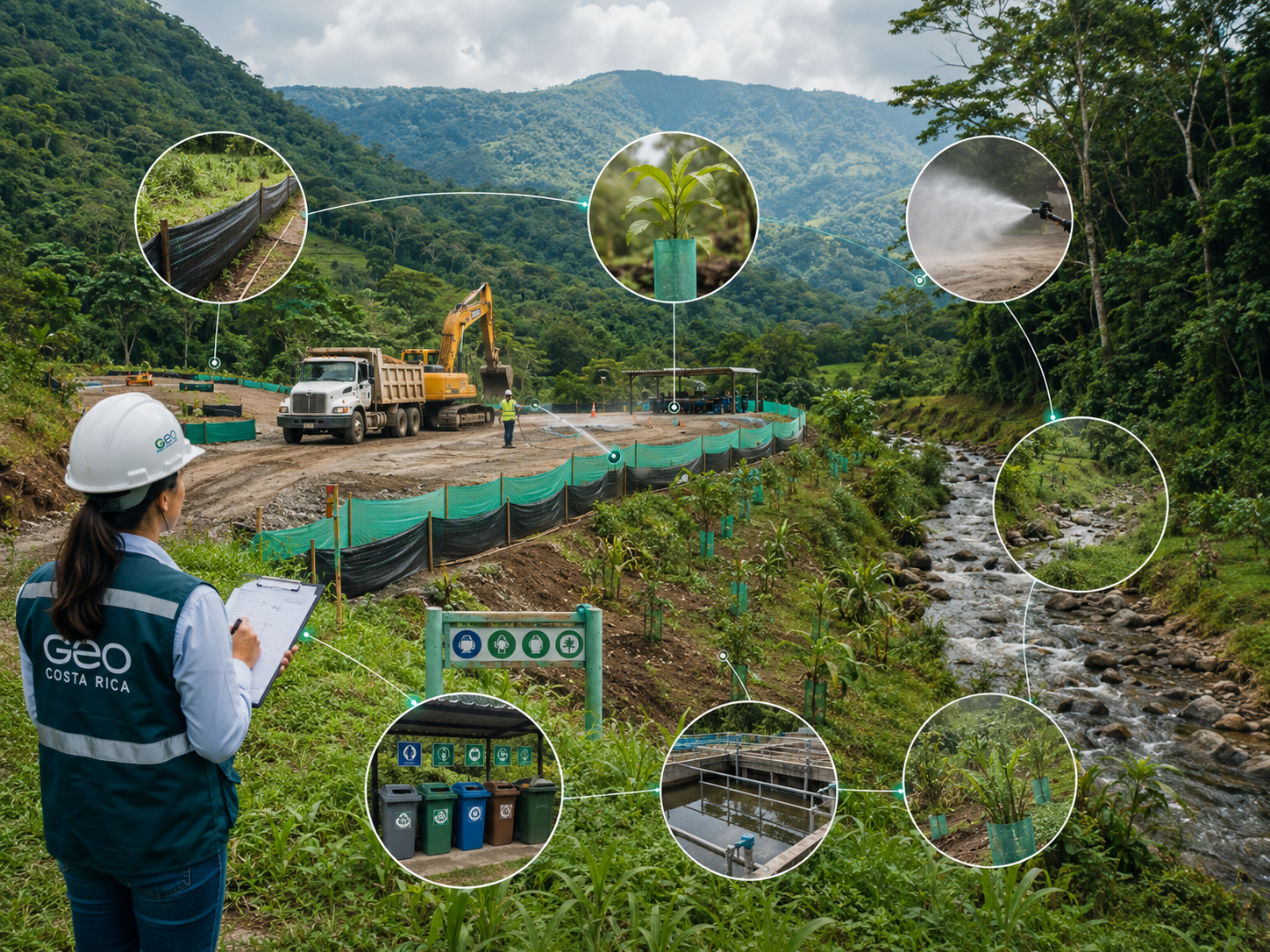
Environmental management takes shape through concrete actions
- Erosion and sediment control.
- Protection of watercourses and sensitive areas.
- Waste management and appropriate storage.
- Dust, noise and emissions control.
- Revegetation, restoration or vegetation offsets.
- Wastewater and stormwater runoff management.
- Signage, site organization and good practices.
- Environmental compliance inspections and follow-up.
The EMP draws on the project’s technical studies
The plan’s measures are not developed in isolation. They should address site conditions and the findings of studies that make up the project’s environmental assessment.
Environmental Impact Assessment
Identifies and assesses impacts that provide the basis for structuring EMP measures.
Project Georeferencing
Helps map project components, constraints and areas where environmental measures must be implemented.
Specialized technical studies
Geology, soils, hydrogeology, hydrology and natural hazard studies provide inputs for defining specific measures.
Environmental Management Plans in SETENA procedures
An EMP may form part of the environmental viability process as a component addressing project management, monitoring and environmental commitments.

The technical plan and the administrative procedure are not the same
This page describes the Environmental Management Plan as a technical deliverable focused on measures, responsibilities, indicators and follow-up. When required by the applicable procedure, that content is incorporated into the corresponding environmental file submitted to SETENA.
The EMP defines measures; environmental supervision helps verify compliance
The relationship between the plan and environmental supervision is essential to turn written commitments into effective oversight.
Defines
Organizes measures, responsible parties, timelines, indicators and follow-up mechanisms.
Verifies
Supports implementation of the plan and documents environmental compliance according to the project’s scope.
How we develop an Environmental Management Plan
We organize the work so the plan is useful, practical to implement and consistent with actual project conditions.
Review the project
Assess location, activities, design and environmental background.
Define the scope
Identify impacts, commitments and management needs.
Structure the measures
Organize environmental actions by project component and stage.
Assign responsibilities
Link measures to responsible parties, deadlines and control methods.
Define indicators
Establish verifiable criteria for compliance and follow-up.
Integrate the document
Compile the plan with its implementation, monitoring and control framework.
A structured plan ready to implement and verify
Before requesting an Environmental Management Plan
Is an EMP the same as an EIA?
No. An EIA identifies and assesses impacts; an EMP organizes the measures used to manage and monitor them.
Do all EMPs have the same components?
No. Content depends on the project type, its impacts, required measures and the scope of the environmental file.
Is an EMP only used for submissions to SETENA?
Not necessarily. It can also help organize and supervise a project’s environmental management.
What kinds of measures may be included?
Measures may address prevention, mitigation, correction, compensation, monitoring, waste management, erosion control and restoration, among others.
How is compliance with the plan verified?
Through indicators, inspections, monitoring, records, photographs, reports and other supporting evidence specified in the plan.
Does an EMP guarantee approval of the application?
No. An EMP provides a technical framework for environmental management, but the final decision rests with the competent authority.
Need to organize environmental measures and follow-up for your project?
We can review your project, its current stage and the available information to define the scope of the EMP and develop a useful, clear and verifiable plan.
Let us review your project
Tell us what you intend to develop, what stage you are at and what support you need for environmental management.