



Crushing and Mineral Processing Plants in Costa Rica
Technical support for crushers, crushing and screening plants, and other mineral beneficiation or processing facilities, integrating site review, mapping, operational layout, environmental assessment, and technical procedures before the DGM.
Technical support for crushers and mineral processing plants
We provide technical support for facilities that crush, screen, wash, separate, or process mineral materials, according to each project's characteristics and requirements.
Crushing and size reduction
Facilities that reduce the size of material to facilitate subsequent screening, handling, or processing.
Material separation and preparation
Screening, washing, sieving, or other operations used to obtain materials with specific properties.
Mineral processing
Facilities in which mineral material is treated to separate, concentrate, or improve the product before transportation, marketing, or subsequent use.
The facility type, process used, and relationship to a mining concession determine the technical and administrative scope that must be assessed.
What is a crusher or mineral beneficiation plant?
A facility in which mineral material undergoes one or more processes to reduce its size, classify, separate, wash, or prepare it for subsequent use.
- Crushing:reducing material size using crushing equipment.
- Screening:separating material by size or other product characteristics.
- Washing or separation:processes used when required by the material and product.
- Product preparation:conditioning the material for storage, transport, sale, or subsequent use.
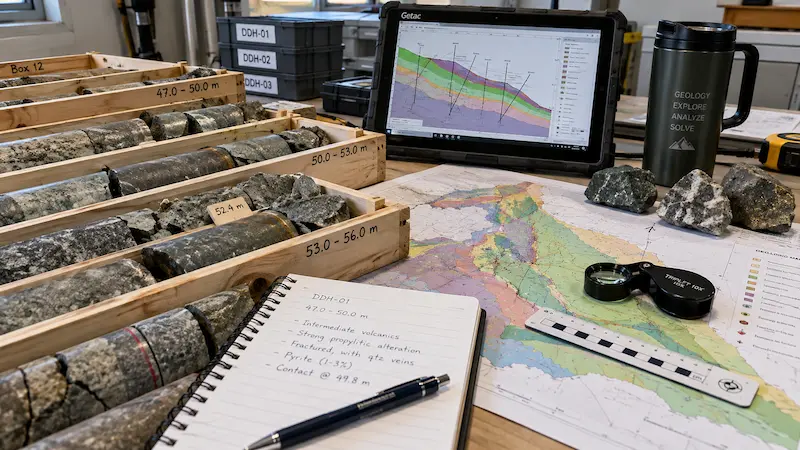
A “planta de beneficiamiento” (mineral beneficiation plant) is a broader concept that may include other mineral treatment or processing operations.
Extracting material and processing it are not the same activity
Mining extraction concerns removal of the resource. Beneficiation involves subsequent material processing through crushing, screening, washing, separation, or other methods.
Extracting the resource
The activity through which mineral material is removed or extracted from its natural location.
- Extraction area.
- Material extraction.
- Conditions of the mining concession.
Processing the material
Treating material after extraction to reduce its size, screen, separate, or prepare it according to the intended product.
- Crushing.
- Screening and separation.
- Final product preparation.
A processing facility may be linked to an extraction concession or require a separate administrative procedure, depending on the project's configuration and applicable legal framework.
We assess how the facility actually operates
Before preparing technical documentation, we review processes, equipment, operational areas, and the relationship between the various material handling and processing stages.
Material flow
We examine how material enters the facility, moves through processing stages, and becomes the final product.
Crushing, screening, and handling
We identify the main equipment and its functions in crushing, screening, conveying, or treatment.
Functional areas
We review receiving, processing, storage, circulation, and dispatch areas to understand the overall plant layout.
Type and origin
We identify the material to be processed and its relationship to the source or concession from which it originates.
Facility location
We assess the crusher or plant location in relation to access roads, properties, infrastructure, and other relevant surrounding features.
Operating conditions
We identify technical and environmental factors to be incorporated into the project's subsequent assessment and documentation.
Equipment, processes, operating areas, material origin, and mapping must be consistent throughout the application file.
Mapping and technical layout of the facility
The plant must be clearly represented on the site, showing the relationships among equipment, operating areas, access roads, and other project components.
Plant operating areas
We map material receiving, crushing, screening, storage, circulation, and dispatch areas.
- Main equipment and components.
- Storage and handling areas.
- Internal circulation and access roads.
Location and GIS support
We integrate the facility with the property, access roads, infrastructure, and other relevant geographical features to document the project accurately.
- Project area delineation.
- Coordinates and spatial references.
- Supporting maps and GIS files.
Is the plant linked to an existing concession, or does it require its own concession?
The technical and administrative route depends on the plant's relationship to a mineral extraction concession.
Plant associated with an existing extraction concession
A plant may form part of a mineral extraction concession when it processes materials linked to that activity.
- If the plant was already included in the project:its consistency with concession conditions and the corresponding environmental assessment must be reviewed.
- If the plant is added later:prior environmental approval and the corresponding DGM authorization are required.
Independent Mineral Beneficiation Concession
A beneficiation plant may also operate under its own mining concession, even if its operator does not hold an extraction concession.
- Temporary Area Reservation.
- Environmental approval.
- Regulatory Technical Study.
- Formalization of the Beneficiation Concession.
This distinction must be established at the outset because it determines the applicable environmental, technical, and administrative route.
Environmental approval and mining procedures must be consistent
The SETENA procedure depends on how the plant is incorporated into the mining project: a plant associated with an existing concession and an independent Beneficiation Concession do not follow identical routes.
When added to an existing concession
When a plant is subsequently added to an already granted extraction concession, the corresponding environmental approval must first be obtained before requesting authorization from the DGM.
When a separate Beneficiation Concession is required
The independent route includes a Temporary Area Reservation, environmental approval, and subsequent formalization of the Beneficiation Concession before the DGM.
SETENA and DGM must describe the same facility
Processes, equipment, layout, operating areas, material origin, and site conditions must be consistent across environmental and mining documentation.
Environmental approval does not replace the corresponding DGM authorization or concession.
The DGM procedure depends on the type of application
A plant linked to an existing concession and an independent Beneficiation Concession do not follow exactly the same route.
Plant associated with an existing concession
- Review of the current concession conditions.
- Prior environmental approval when the plant is subsequently added to the project.
- Application for the corresponding DGM authorization.
- Technical review and responses to official requests, when applicable.
Independent Beneficiation Concession
- Temporary Area Reservation.
- Environmental approval.
- Regulatory Technical Study.
- Formalization of the DGM application.
- Institutional review and responses to requests.
- DGM recommendation.
- Executive Branch decision.
The Technical Study carries a specific professional responsibility
For a Beneficiation Concession, regulations require a Technical Study in accordance with Annex 9, prepared, endorsed, and directed by a geologist or mining engineer registered with the relevant professional association.
Geo Costa Rica can integrate mapping, territorial analysis, spatial information, and other technical inputs into the application within that professional framework.
The first is connected to an existing concession; the second is a separate mining concession and follows its own procedure.
We begin with the actual facility before defining the application
Each crusher or plant has different equipment, processes, layout, and site conditions. We therefore first review how the project operates before defining the necessary studies, plans, and documents.
Initial review
We identify location, processes, equipment, material origin, operating areas, and the current status of the application.
Technical diagnosis
We review mapping, layout, operations, environmental conditions, and available documents to identify gaps or specific needs.
Preparation of technical inputs
We prepare or supplement maps, plans, spatial information, process descriptions, and other technical documents defined for the project.
Technical support for the application
When clarifications, corrections, or additional information are required within the agreed scope, we help review and prepare the inputs needed to continue the process.
Common questions about crushers and beneficiation plants
The procedure depends on whether the plant forms part of an existing concession or requires its own Beneficiation Concession.
Do I need an extraction concession to operate a beneficiation plant?
Not necessarily. The legal framework allows an independent Beneficiation Concession even when its holder does not own a mineral extraction concession.
Does a plant located inside a quarry need another concession?
Not necessarily. A plant may be part of an existing extraction concession. If it is added later, prior environmental approval and the corresponding DGM authorization must be reviewed.
Can a plant process material from another concession?
This may be possible, but material sourcing is regulated. Processing minerals from outside the concession requires prior DGM authorization, and materials must originate from duly granted and valid concessions.
Does a mobile crusher follow the same procedure as a fixed plant?
Not necessarily. The environmental approval for the site or project must cover use of the mobile crusher, and specific rules apply in certain circumstances, such as public works projects.
How long can a Beneficiation Concession be granted for?
When independent of an extraction concession, it may be granted for a maximum of 25 years, subject to the applicable review. When the plant is linked to an extraction concession, its term must coincide with that concession.
Does a Beneficiation Concession require a Technical Study?
Yes. For an independent concession, regulations require a Technical Study under Annex 9, prepared, endorsed, and directed by a geologist or mining engineer registered with the appropriate professional association.
Does environmental approval replace the DGM procedure?
No. SETENA and DGM have different responsibilities. Environmental approval forms part of the applicable process but does not replace the corresponding mining authorization or concession.
Can Geo Costa Rica assess a plant that is already installed?
Yes. We can review the facility, maps, processes, material origin, available documentation, and technical requirements to identify the support needed.
We review the facility and permitting route before defining the studies
We can review location, processes, equipment, material origin, area layout, mapping, and available documentation to identify the technical, environmental, and administrative support the project requires.