



Environmental Feasibility of a Property
Before purchasing a property or defining a project, it is important to understand what can be developed, which restrictions must be observed, and what requires verification.
We assess the property in relation to its proposed use to identify environmental and territorial constraints, reduce uncertainty, and inform investment decisions in Costa Rica.
A suitable-looking property is not enough
Location, price, and available area are only part of the decision. Environmental and territorial conditions can affect a project’s design, cost, schedule, and actual development potential.
What could this property mean for your project?
We assess the property in relation to its proposed use, considering restrictions, protected areas, physical conditions, resource availability, and any investigations that may be needed.
This initial assessment does not replace institutional authorizations or guarantee project approval. It helps anticipate questions, organize information, and avoid decisions based solely on assumptions.
Before signing a purchase agreement, choosing among properties, defining the layout of works, or making significant investments, an early assessment helps identify which uncertainties should be resolved first.
What do we need to know before proceeding?
We do not apply a rigid checklist to every property. We select the questions that have practical consequences for the proposed project and the client’s decision.
Is the project compatible with its territorial setting?
We review known land-use, access, site-layout, and spatial compatibility conditions relevant to the proposal.
How much of the property can be used?
We consider setbacks, protected areas, slopes, watercourses, and other restrictions that could affect the placement of works.
How will water supply and sanitation be addressed?
We identify questions aboutwater availability, water intakes, and sanitation options for further review, as appropriate.
Are there natural conditions requiring attention?
We identify indicators or records ofnatural hazards, slope stability, andgeology and soilsrelevant to the location of works.
Which records still need to be verified?
We distinguish available records, necessary consultations, and matters that cannot be resolved without additional verification.
What should be resolved before committing resources?
We turn findings into outstanding questions, preliminary adjustments, and investigation priorities.
From the investment question to the site assessment
The review is organized in stages. We first define the decision it needs to support, then assess the available information and determine which aspects need confirmation.
Define the objective
Purchase, development, site selection, or pre-investment review: each decision calls for a different scope.
Cross-check evidence
We examine background records, relevant regulations, territorial information, andmapping. A site visit is included when it adds value.
Prioritize decisions
We distinguish facts, restrictions, and uncertainties and propose proportionate next steps based on the conditions identified and the scope of the assessment.
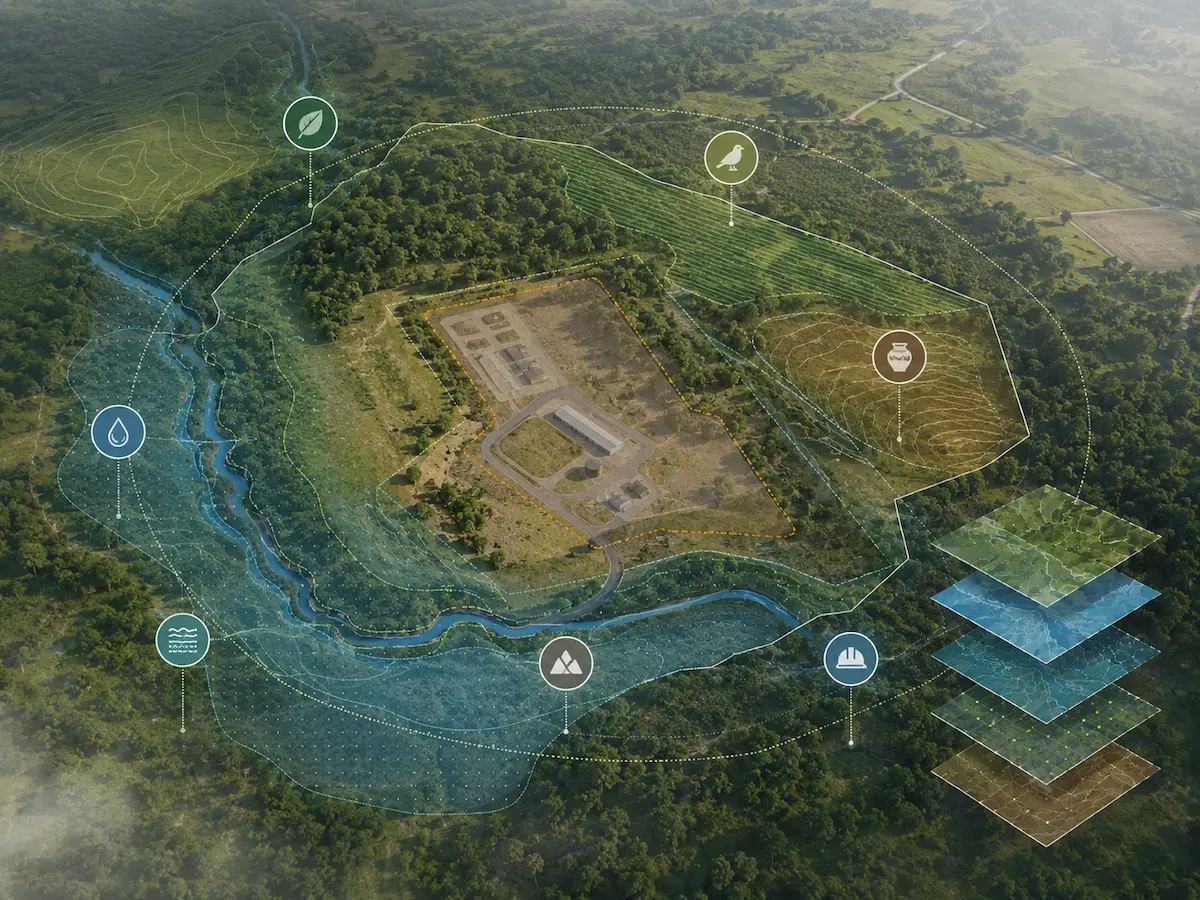
A property cannot be understood through a single map layer
The analysis combines territorial and environmental variables with the needs of a specific project. The goal is not to produce maps for their own sake, but to generate technical insight for decision-making.
Information is cross-checked with due regard to its limitations in scale, coverage, and currency. When a conclusion requires field evidence or a specific study, we identify what must be verified before proceeding.
What changes after assessing the property?
An early assessment should distinguish what the available information supports, what constrains design, and what warrants investigation before proceeding.
Conditions we already know
Documented or verified factors that provide a basis for decisions, with the source and limitations of the information stated.
Restrictions to incorporate into the project
Protected areas, setbacks, access, topography, or other conditions affecting site layout, design, or use.
Questions not yet sufficiently answered
Incomplete records, information at an unsuitable scale, or matters requiring institutional consultation or a targeted site inspection.
Prioritized next steps
Preventive adjustments, checks, and relevant studies before making commitments that are difficult to reverse.
The outcome may be to proceed, adjust, verify, or reconsider
First understand the issue, then select the study
Not every property requires the same level of technical investment. A sound initial assessment identifies where further investigation is needed and why.
Focused and proportionate review
We begin with the client’s question and the available information. We document limitations and issues requiring attention without presenting hypotheses as established facts.
The initial review may identify restrictions and inform decisions, but does not replace investigations requiring sampling, measurements, or specific permits.
Specialist studies selected for each case
Studies may be needed ingeology and soils,hydrogeology, infiltration, water availability,natural hazardsor specific territorial analyses.
The scope is defined before work begins.The client should know which questions the assessment will answer, what is excluded, and which additional verifications may be recommended.
Feasibility and services that complement the assessment
We select the appropriate tool for the objective: understanding a property, defining constraints, comparing options, or reviewing environmental risks before an acquisition.
Environmental Constraints Assessment
A focused review of restrictions and protected areas that may directly affect the usable portion of a property.
Property and Land Assessment
A geographic assessment of a property and its surroundings to understand constraints, connections, and relative location.
Property and Location Comparison
Comparison of territorial conditions when several project locations are still being considered.
Environmental Due Diligence
Review of risks, records, and potential environmental liabilities relevant to a transaction. The scope may include property feasibility and other agreed verifications.
Are you considering buying, investing in, or developing a property?
Tell us where the property is located, what use you have in mind, and what stage your decision has reached. We can help determine whether to begin with an environmental feasibility assessment or consider a broader due diligence review.
Information about your property will be treated confidentially and will not be used as public website material.