




Environmental Diagnostic Assessment (EDA) before SETENA
The EDA provides a direct assessment of an activity, work or project already in operation, reviews its status under current environmental regulations, and identifies corrective measures needed to apply for an Environmental Permit through SETENA.
The EDA applies only in specific circumstances
The Environmental Diagnostic Assessment is a voluntary instrument for activities, works or projects already in operation that meet at least one of the circumstances established by its specific regulations.
Operating before January 17, 1997
Activities, works or projects that began before the first environmental impact assessment regulation issued under Costa Rica’s Organic Environmental Law.
Started between February 2002 and June 2004
Activities initiated between February 12, 2002, and June 24, 2004, inclusive, during the period defined by the regulations due to the partial suspension of the environmental assessment process.
Activities that originally did not require an EIA
Activities not originally required to undergo an Environmental Impact Assessment, but which voluntarily seek an Environmental Permit for practical reasons.
Obtaining a permit following enforcement proceedings
The EDA can also be used when administrative or judicial proceedings determine that an operating activity must obtain an Environmental Permit.
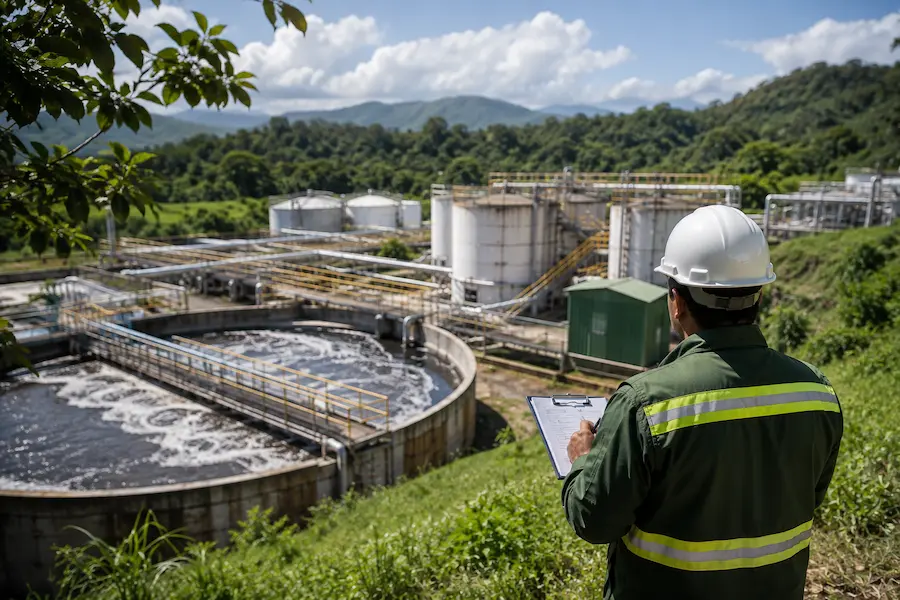
The EDA is carried out directly at an activity already in operation
Unlike assessing a proposed project, this process allows us to observe how an activity actually operates, what infrastructure exists, which impacts occur, and what conditions need correction or documentation.
LIVENA: checking environmental compliance
The assessment uses the Environmental Regulations Verification Checklist (LIVENA) to systematically review the legal and environmental requirements applicable to the activity.
Identify requirements
We determine which aspects of environmental regulations must be verified for the activity.
Verify on site
We compare those requirements with the facilities, processes and conditions observed.
Document findings
Aspects that fail to meet applicable regulations are recorded as findings.
Any noncompliance identified must be documented
The purpose of the EDA is to establish the actual environmental situation of an existing activity. Findings provide the starting point for the Environmental Compliance Plan.
The assessment must lead to an Environmental Compliance Plan
Where findings exist, the EDA must establish which corrective action will be taken, who is responsible, when it must be completed, and how compliance will be verified.
Finding
Condition identified during the assessment.
Corrective action
Measure required to address the finding.
Deadline
Time frame established for the correction.
Responsible party
Person responsible for implementing the action.
Indicator
Evidence used to verify compliance.
The EDA brings together assessment, mapping, evidence and corrective actions
We assess existing operations and organize the pathway to compliance
The value of the EDA lies in integrating site observations, regulatory requirements, documentation, mapping and corrective measures into a consistent assessment of an activity.
From an operating activity to a verifiable environmental file
Review the background
We determine whether the activity meets the EDA’s legal eligibility criteria.
Conduct the assessment
We visit the site and verify existing environmental conditions.
Complete LIVENA
We assess operations against applicable environmental requirements.
Define corrective measures
We prepare the Environmental Compliance Plan based on the findings.
Submit the EDA
We compile the documents and manage submission through the Digital Platform.
SETENA issues its decision
The authority reviews the file and issues the corresponding administrative decision.
EDA approval may require environmental follow-up
The decision may require appointing an environmental officer and monitoring corrective measures through the Digital Environmental Logbook during the period established by SETENA.
Professional oversight
The decision may require an environmental officer for the relevant period.
Compliance records
Actions and progress may be documented through the Digital Environmental Logbook.
Verification of results
Follow-up makes it possible to verify implementation and effectiveness of the measures established.
Environmental Permit through an EDA before SETENA
SETENA reviews the assessment, findings, corrective measures and submitted documentation before issuing its decision.
National Environmental Technical Secretariat
SETENA
The EDA must reflect the activity’s actual environmental conditions
The responsible Environmental Consultant conducts the assessment and prepares the report, but SETENA alone determines through an administrative decision whether an Environmental Permit should be granted and under which conditions.
Applications that do not meet the established requirements for the EDA procedure may be rejected by the authority.
Executive Decree No. 42837-MINAE
Environmental Diagnostic Assessment (EDA) Regulations, governing eligibility, on-site assessment, LIVENA, the Environmental Compliance Plan, required contents, processing and follow-up.
Environmental Diagnostic Assessment and operating activities
Can the EDA be used for any activity that started without SETENA approval?
No. The activity must meet one of the conditions expressly established by Decree No. 42837-MINAE.
Can the EDA be prepared entirely from an office?
No. The regulations require the assessment to be conducted directly at the site of the operating activity, work or project.
What happens if environmental noncompliance is found?
Noncompliance is recorded as findings and, where appropriate, linked to corrective measures in the Environmental Compliance Plan.
Does an EDA require an Environmental Consultant?
Yes. The professional responsible for the EDA must be registered and authorized in SETENA’s Environmental Consultants Registry.
Does the EDA require geographic information?
Yes. The regulations provide for study-area boundaries in CRTM05 and KML geospatial files, along with a photographic record.
What information do we need to get started?
Primarily the location, cadastral survey plan, description of the activity, approximate start date, existing permits and any available environmental or administrative records.
Is your activity already operating and in need of an environmental status review?
Before initiating the procedure, we verify whether the EDA is applicable and review the operating conditions, background and available documentation.
First, let us check whether an EDA applies
Send us the activity’s location, a description of current operations, approximate start date and any available permits, decisions or background documentation.