




Other SETENA Forms and Environmental Assessment Routes
Some projects follow specific environmental procedures because of their activity, scale, or institutional status. Here we explain the routes for marine aquaculture, desalination systems, and government projects eligible for priority review.
Some Activities Have Specific Environmental Procedures
Form numbers do not represent a sequence of procedures. Each route is determined by the type of activity, its scale, and the specific conditions under which it is carried out.
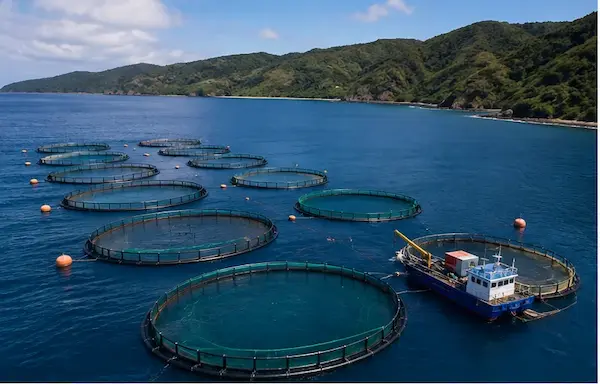
Environmental assessment based on the scale of the aquaculture operation
Marine aquaculture projects follow a specialized route whose category depends on production, area, species, and site conditions.
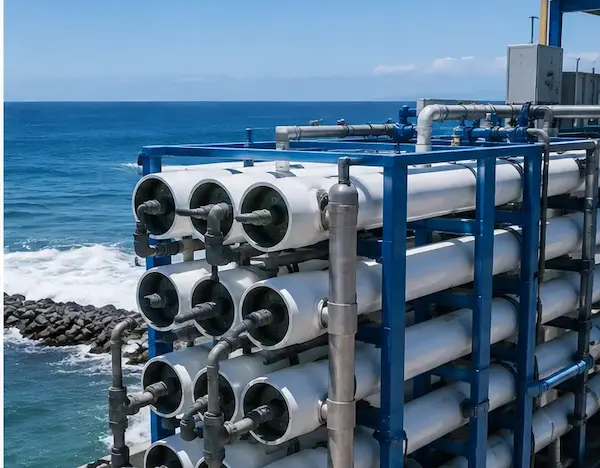
Assessment based on system flow rate
Desalination projects have specific environmental requirements, and the applicable instrument depends primarily on the maximum planned flow rate.
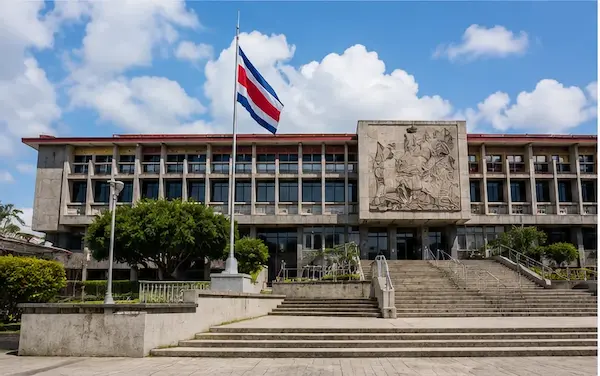
Government projects eligible for priority review
Certain public investment projects may receive priority in the environmental review process while retaining the assessment instrument required by their classification.
Marine Aquaculture Projects Are Classified by Scale
D5 is the specialized instrument for assessing the environmental impacts of aquaculture operations located directly in the sea. The applicable scale is determined by the characteristics of the operation, production, area, and site conditions.
Social and Family Scale
This corresponds to the social and family scale and uses an Environmental Registration under the specific regulatory framework for marine aquaculture.
Small Scale
Projects with low potential environmental impact managed through a Sworn Declaration of Environmental Commitments.
Medium Scale
Projects at this scale require an Environmental Forecast and Management Plan appropriate to their characteristics and impacts.
Large Scale
This applies to projects with higher production and potential impact and requires preparation of an Environmental Impact Assessment.
Scale Should Not Be Determined by Guesswork Alone
SETENA provides a guidance tool that relates species, area, and production to establish the project's preliminary scale. The final classification may be adjusted during application review.
Desalination Systems Follow a Specific Environmental Route
Any work, activity, or project involving desalination must complete the environmental approval procedure. The required instrument is determined by the scale of the system and the maximum flow rate to be used.
0–5 L/s
For this flow-rate range, the regulatory classification requires D1 accompanied by a Sworn Declaration of Environmental Commitments.
5–20 L/s
For this flow-rate range, the prescribed instrument is D1 accompanied by an Environmental Forecast and Management Plan.
20 L/s and Above
Higher-flow projects are assessed through D1 accompanied by an Environmental Impact Assessment.
D3 Means Priority Review, Not a Lower Level of Environmental Assessment
Certain public investment projects may be designated as government projects with D3 priority. The environmental instrument they must submit remains the one determined by the project's classification and assessment.
Public Investment Through Concessions
Projects developed under concession arrangements covered by the applicable regulations.
Public-Private Partnership
Government-initiated projects developed through public-private partnerships.
Public Procurement
Certain public activities, works, or projects developed through public procurement procedures.
Affordable Social Housing
Social housing projects covered by Article 5 may also qualify for D3 priority.
Determine the Environmental Instrument First, Then Establish D3 Priority
The project must first be classified according to its activity and environmental significance. Once the appropriate assessment is identified, the form indicates that it is a government project eligible for D3 priority.
The Project Activity Determines the Environmental Route
Marine Aquaculture Project
We first identify the species, production, area, and scale of the operation to determine its D5 category.
Desalination Project
The system flow rate and the project's environmental characteristics determine the applicable D1 instrument.
Government Project
We first identify the environmental assessment instrument normally applicable to the project and then verify whether D3 priority applies.
It May Require a Different Environmental Assessment Route
We can review the project's activity, location, size, and characteristics to determine whether D1, D1-C, D1-Torres, D4, D6, or another procedure applies.
A Complete Application Is Not Needed to Begin the Review
An initial review of basic information allows us to identify the appropriate environmental route before determining which documents and studies the project actually requires.
We Identify the Route Before Preparing the Application
Understand the Project
We review the activity, location, scale, and key characteristics.
Identify the Regulations
We determine which specific environmental regulatory framework applies.
Determine the Assessment Instrument
We identify the relevant form, scale, or technical assessment instrument.
Coordinate Studies
We integrate only the technical components required for the case.
Prepare the Application
We organize the technical, cartographic, and administrative documentation.
Support the Procedure
We provide technical support throughout the SETENA procedure within the agreed scope.
Specialized Procedures Within Environmental Impact Assessment
Although these routes have their own requirements, all form part of the system through which SETENA assesses the environmental impacts of activities, works, and projects.
National Environmental Technical Secretariat
SETENA
Each Route Has Its Own Regulatory Basis and Requirements
Marine aquaculture, desalination, and government projects are subject to different regulatory frameworks. Applications must use the current regulations and forms applicable to each activity.
Geo Costa Rica provides technical preparation and coordination, while SETENA is responsible for reviewing the application and issuing the corresponding administrative decision.
Special Forms and Environmental Procedures Through SETENA
Are D1, D3, D4, D5, and D6 Consecutive Stages?
No. They refer to different forms, conditions, or routes within the environmental assessment system and should not be interpreted as a sequence.
How Do I Know Which D5 Scale Applies to a Marine Aquaculture Project?
Classification considers variables such as species, area, and production. SETENA provides an indicative calculator, and the classification is verified during application review.
Does Every Desalination System Require Environmental Assessment?
The Desalination Systems Regulation establishes the requirement for environmental approval for works, activities, or projects involving desalination.
Is D3 a Simpler Environmental Form?
No. D3 designates certain government projects for priority review. The applicable environmental instrument still depends on the project's classification.
Does D3 Priority Guarantee Approval?
No. Priority concerns the order of review, not the outcome of the Environmental Impact Assessment.
What Information Do You Need to Identify the Correct Route?
We can usually begin with the location, a description of the activity, dimensions or capacity, developer information, and any available designs or background documents.
Does Your Project Have Special Characteristics, and Are You Unsure Which Environmental Procedure Applies?
We review the activity, location, scale, and background information to identify the appropriate environmental procedure before determining the studies and documents needed.
Let's Review Your Project
Send us the location, a description of the activity, preliminary dimensions or capacity, and any technical documentation already available.