



Water Wells and Aquifer Behavior
We assess how a well and the aquifer supplying it respond, relating water levels, discharge, pumping, geological conditions and other wells in the surrounding area.
A well provides a window into part of the groundwater system. Interpreting its behavior correctly also requires understanding where the water comes from and how the aquifer responds to extraction.
How does a well function within an aquifer?
A well does not produce water independently. It is a structure designed to capture water stored and transmitted by a hydrogeological system.
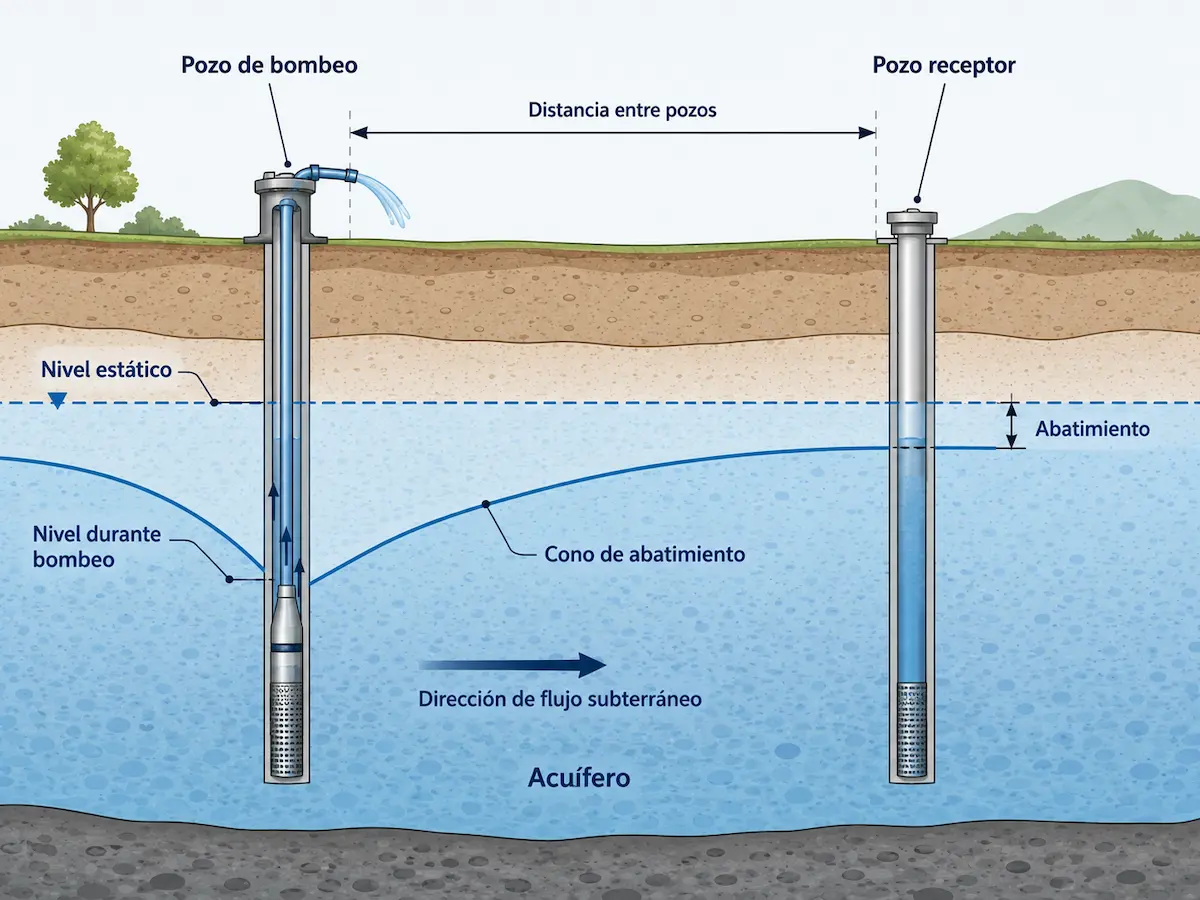
Well behavior depends on the relationship between recharge, geology, extraction and the surrounding environment. When water is pumped, the system responds according to aquifer properties and interactions with other wells or nearby features of the hydrogeological environment.
Therefore, analyzing a well involves more than determining its discharge. We must also interpret where the water comes from, how it moves through the subsurface and what effects its use may have on the system supplying it.
Recharge
Some of the water infiltrating the ground can reach the groundwater system and help replenish aquifer storage.
Geology
Subsurface materials, permeability, continuity and fracturing control how groundwater is stored and flows.
Pumping
Pumping temporarily changes water levels around a well. The magnitude of this response depends on discharge, duration and aquifer properties.
Other wells
Different wells may draw from the same hydrogeological system and, under certain conditions, their responses may be connected.
Knowing how much water a well yields is not enough; we also need to understand which system supplies that water and how the aquifer responds.
When should well behavior be assessed?
An assessment can be useful when a well's behavior changes, extraction conditions are modified or a better understanding of its relationship with the aquifer and other wells is needed.
The water level has declined
This change may be related to pumping, recharge, seasonal variations, other wells or conditions specific to the well.
The well seems to yield less water
Before attributing the change to the aquifer, it is important to distinguish the hydrogeological response from potential problems with the well itself or its operation.
A new well has been installed nearby
It may be useful to assess whether both wells draw on a hydraulically connected system and whether there is reason to investigate potential interaction.
An increase in extraction is planned
Understanding the system's current response helps identify the information that should be reviewed before significantly changing the pumping regime.
I need to understand the effects of pumping
Certain assessments require estimating how far the hydraulic response caused by a well may extend.
There is limited information about the well
Available records can be combined with nearby well data, geology, water levels and field observations to better reconstruct its hydrogeological context.
What do we assess in a well and its surroundings?
Interpretation combines well-specific information with data needed to understand the aquifer and surrounding hydrogeological conditions.
From field data to aquifer behavior
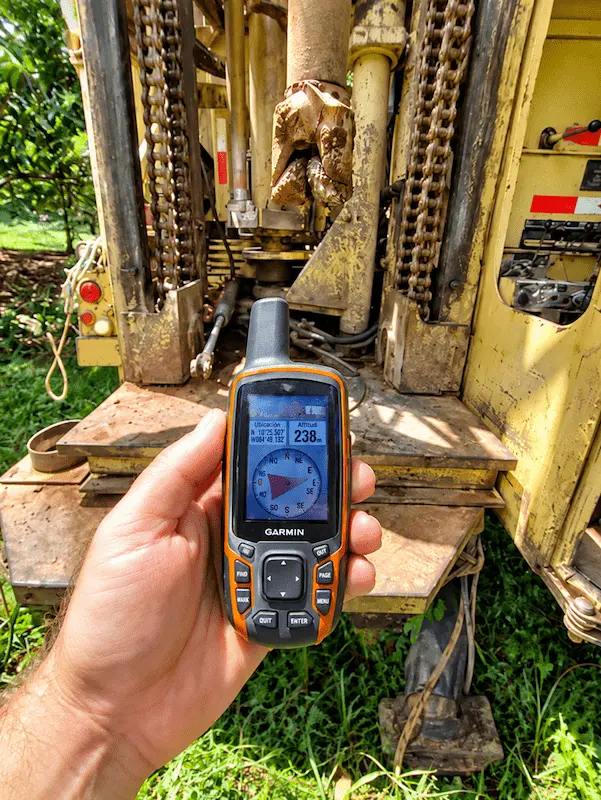
Measurements of water levels, discharge and pumping response show how a well behaves under specific operating conditions.
These data are interpreted alongside well construction details, local geology and records from other wells to distinguish conditions specific to the well from the responses of the hydrogeological system.
Well characteristics
Location, depth, construction, diameter, screened or open intervals, and available drilling records.
Static and pumping water levels
We compare water levels before and during extraction to observe how the well responds to pumping.
Discharge and drawdown
We relate pumping discharge to water-level decline to understand the hydraulic response observed during pumping.
Recovery
Water-level behavior after pumping is reduced or stopped provides additional information about the response of the well and the system.
Hydrogeological conditions
We analyze geology, permeability, fracturing, water levels and other information needed to interpret the medium supplying the well.
Other wells
The location, depth, water levels and operation of nearby wells can help explain relationships within the same system.
Is the problem in the well or in the aquifer?
A reduction in discharge or a change in water levels does not, by itself, identify the cause. Conditions specific to the well must be distinguished from changes that may be occurring within the hydrogeological system.
Conditions related to the well
- Well design or construction
- Physical condition of the well
- Pumping equipment
- Operating conditions
- Clogging or deterioration
Conditions related to the aquifer
- Recharge variations
- Seasonal changes
- Declining water levels in the surrounding area
- Increased extraction
- Interaction with other wells
How do we investigate well behavior?
The investigation combines information about the well with the characteristics of the aquifer and its surroundings. The level of detail depends on the question to be answered.
Review existing records
We compile drilling logs, previous tests, water levels, discharge measurements and other available well information.
Understand the context
We relate the well to geology, topography, aquifer characteristics and surrounding conditions.
Review nearby wells
Where relevant, we analyze other wells that may provide information about the same hydrogeological system.
Take measurements
Depending on the objective, we may measure water levels, discharge, pumping response, recovery or other necessary observations.
Interpret the findings
We compare the results to identify which explanation is consistent with the observed behavior.
Related technical studies
Not all well assessments require the same study. Each method addresses a different technical question.
Pumping Test
Shows how the well and aquifer respond when water is extracted under controlled pumping conditions.
Well Radius of Influence
Examines the spatial extent of the hydraulic response generated by pumping a well.
Hydrogeological Study
Integrates the information needed to understand how the aquifer functions overall and how a well relates to that system.
What decisions can the analysis support?
Understanding a well's behavior can help distinguish problems, define additional investigations and assess changes related to its operation.
Understand an existing well
Interpret the relationship between its water levels, discharge, construction and hydrogeological conditions.
Investigate changes in yield
Identify which variables should be analyzed before attributing a decline in production to a particular cause.
Assess relationships with other wells
Determine whether there is a hydrogeological basis for further investigation of potential interaction between nearby wells.
Analyze changes in extraction
Understand the system's current response before making significant changes to groundwater withdrawal.
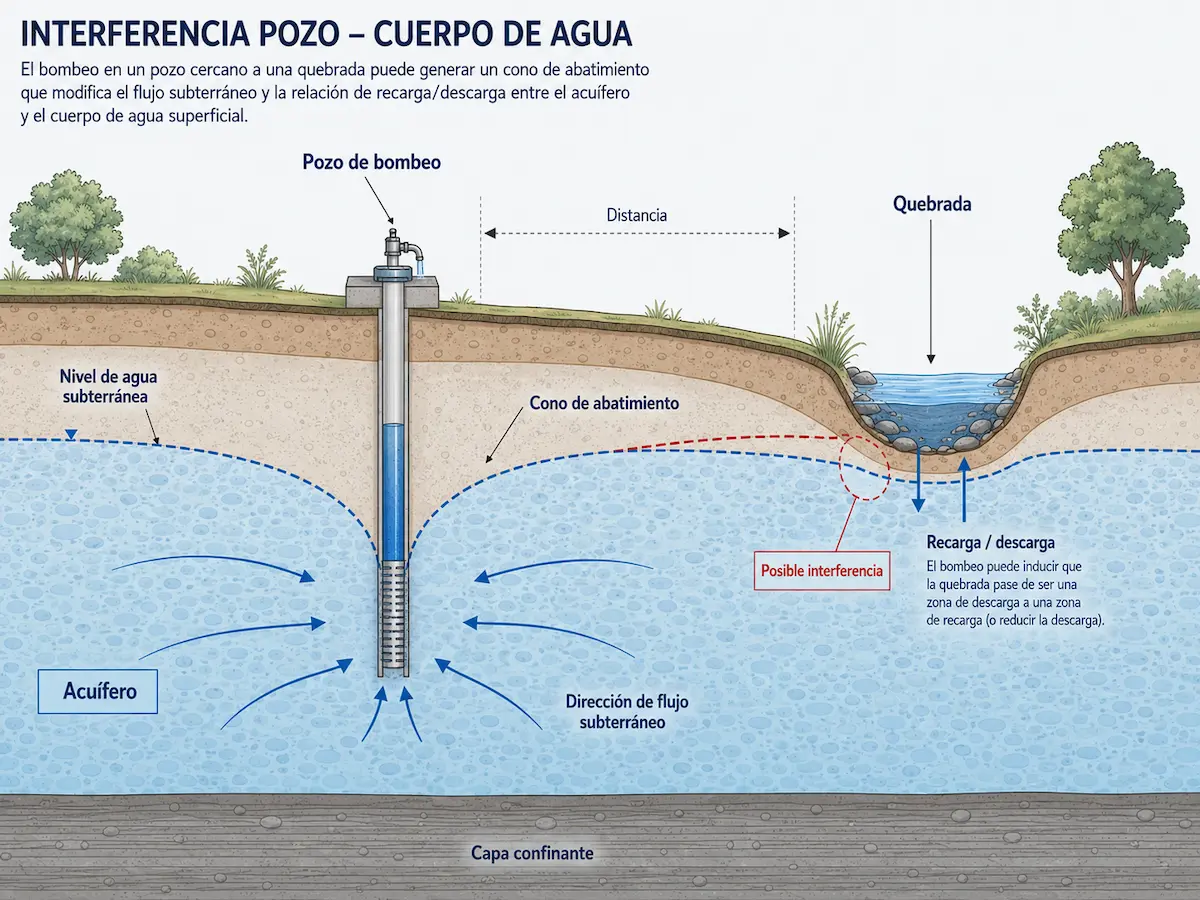
Pumping a well can influence other components of the hydrogeological system
Where the aquifer is hydraulically connected to a surface water body, groundwater extraction can alter hydraulic gradients and water exchange conditions between the two systems.
The magnitude of this interaction depends on hydrogeological characteristics, the distance between the well and the water body, and pumping conditions. An assessment helps determine when further investigation of these relationships is necessary.
Hydrogeological analysis and well management serve different purposes
This page focuses on understanding the hydrogeological behavior of a well. If you need assistance with groundwater use or management of an existing well, we offer a dedicated service for that process.
Frequently asked questions about wells and aquifers
These common questions help explain what can be learned by studying a well and which conclusions require a more comprehensive hydrogeological assessment.
What is the difference between static and pumping water levels?
The static water level is the level when the well is not being pumped or has reached resting conditions. The pumping water level is the level observed during extraction.
What is well drawdown?
It is the decrease in water level associated with pumping relative to a reference condition. Its magnitude depends on the discharge, duration of extraction and response of the system.
What is recovery?
It is the rise in water level after pumping is reduced or stopped. The recovery trend provides information about how the well and aquifer respond.
Can one well affect another?
Interaction can occur when multiple wells draw from a hydraulically connected system and their pumping responses overlap. Distance alone does not demonstrate interference.
Does a declining well yield mean the aquifer is being depleted?
Not necessarily. Reduced yield can be related to the well, pumping equipment, operation, temporary aquifer variations or other factors requiring investigation.
How is a well's radius of influence determined?
The pumping response is assessed using information on discharge, water levels and the system's hydraulic characteristics, according to available data and the applicable method.
What is a pumping test used for?
It helps observe the response of a well and aquifer to controlled extraction by analyzing variables such as discharge, drawdown and recovery.
Can we predict how much water a well will yield before drilling?
Not with certainty. Geological and hydrogeological records can help interpret ground conditions, but the actual yield of a new well becomes known after drilling and testing its response.
Do you need to understand what is happening with a well?
If you have drilling records, water-level or discharge measurements, previous tests or information about nearby wells, we can initially review your case and determine which information would be useful to analyze.